
Which Hospitality Facilities Management Services Are Vital for Luxury Hotels in the UAE in 2026?
Luxury hospitality in the UAE is evolving in 2026.
Yes, design still matters. Location still matters. Iconic architecture and ultra-stylish interiors do impact customer perception. But what’s really gauged for a five-star experience nowadays is how flawlessly everything works behind the scenes.
In cities like Dubai and Abu Dhabi, luxury hotels function as highly engineered ecosystems.
Every smooth check-in, perfectly cooled suite, mood-lit restaurant, and serene spa moment depends on complex infrastructure operating together 24/7 without disruption.
That’s where hospitality facilities management in the UAE becomes a game-changer.
In 2026, hotel facilities management has become a strategic function that protects assets, supports sustainability targets, ensures compliance, and, most importantly, improves guest experience.
Modern luxury hotels are packed with advanced systems.
We’re talking about layered MEP networks, centralized building management systems, smart room controls, industrial-scale kitchens, wellness technology, and sustainability-driven infrastructure.
Guests don’t see any of this. And that’s exactly the point.
The real job of hospitality FM services is to keep complexity invisible.
No temperature fluctuations.
No lighting glitches.
No inconsistent water pressure.
No system downtime during peak occupancy.
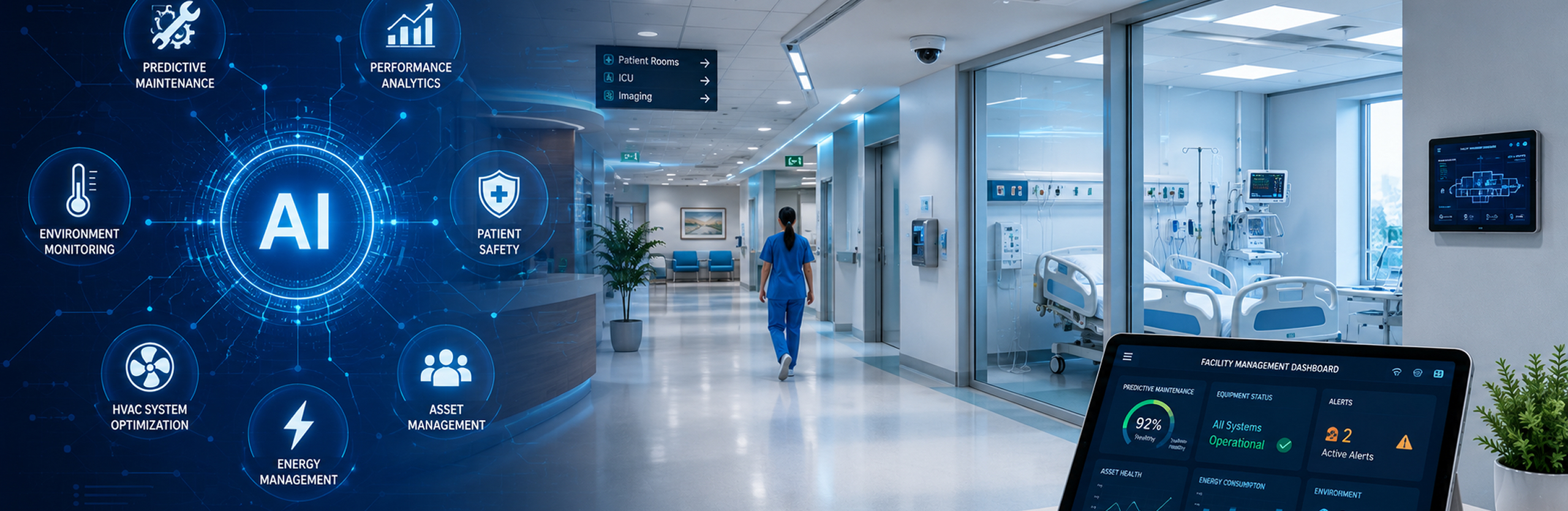
In high-end hospitality, even a small operational hiccup can feel big. That’s why hotel maintenance management in 2026 focuses heavily on predictive and preventive strategies instead of reactive fixes.
Facilities teams now rely on:
- Real-time monitoring dashboards
- Data-driven asset tracking
- Planned preventive maintenance schedules
- Lifecycle forecasting tools
Let’s take HVAC systems, for example. In the UAE’s climate, HVAC systems work overtime.
From a business standpoint, cooling performance goes beyond customer comfort. It directly impacts energy costs and sustainability targets.
Effective hospitality maintenance in the UAE strategies prioritize system diagnostics, energy optimization, and long-term equipment health. This enables HVAC systems to operate smartly, allowing comfort and efficiency to co-exist.
Sustainability: A Core Operational Requirement
Sustainability is now part of the brand.
Luxury hotels in the UAE are increasingly evaluated on environmental performance. Guests are more conscious. Investors are more demanding. Regulations are tighter.
So, sustainability needs to be embedded into hospitality facilities management in the UAE.
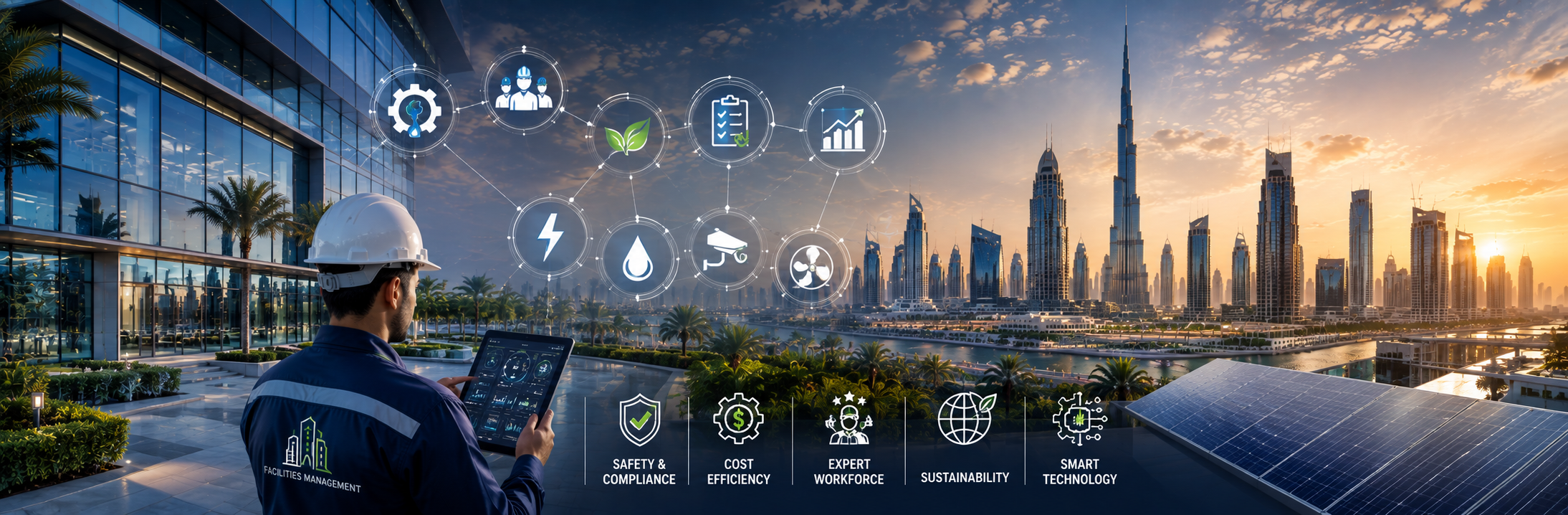
A simpler way is to deploy an integrated FM model. Specialized hospitality FM services in Dubai help businesses align with ESG requirements to support their sustainability goals, including:
- Energy monitoring and optimization
- Water consumption reduction
- Smart lighting retrofits
- Waste management systems
- Building automation controls
Reporting, audits, and compliance documentation have now become part of the job.
Hence, with such complex systems under an integrated FM model, facilities teams can now produce measurable performance data rather than reactive infrastructure maintenance.
Learn more: The Difference Between Traditional FM and Integrated FM: A Complete Guide for 2026
Safety and Compliance in the Hospitality Sector
Safety and compliance cannot be reactive in any industry, especially the hospitality sector.
Luxury hotels operate with minimal tolerance for risk.
Fire detection systems, emergency lighting, backup power, suppression systems, evacuation protocols, everything must work, every time. There cannot be any exception.
Structured hospitality maintenance services ensure that safety isn’t handled as a once-a-year checklist. It becomes part of the daily operational rhythm.
Predictive analysis, continuous inspections, regulatory coordination, testing schedules, and compliance documentation form the foundation of modern hotel maintenance management.
Enhancing Guest Experience Through Integrated Services
Luxury hospitality doesn’t stop at guest rooms.
It extends to spa areas, temperature-controlled pools, landscaped terraces, banquet halls, rooftop lounges, and wellness facilities.
Each of these environments requires technical precision. For example:
- Pool filtration and water quality management
- Humidity control in spas
- Acoustic calibration in event halls
- Lighting alignment in fine-dining venues
- Landscaping and irrigation management
While these may sound like simple tasks, they shape emotional perception. In the case of luxury hotels, polished marble should always look pristine. The lobby must be perfectly fragrant. The spa steam room should have just the right heat and humidity.
These are the outcomes of well-executed integrated hospitality FM services working quietly in the background.
Smart Technology Integration and Digital Infrastructure
In 2026, smart technologies have deeply infiltrated everyday living in the UAE’s luxury hotels.
Mobile check-ins, centralized energy dashboards, automated room controls, and AI-driven maintenance alerts have become standard expectations.
This shift expands the scope of hotel facilities management.
Facilities teams must now coordinate closely with IT departments, manage digital assets, oversee system integrations, and monitor performance analytics.
In highly competitive hospitality environments, smart infrastructure enhances brand positioning.
But technology also introduces risk.
Luxury hotels must partner with well-renowned hospitality FM services in Dubai, as a connectivity or control panel glitch can disrupt guest perception just as much as a mechanical breakdown.
Asset Protection and Long-Term Value
Asset protection equals long-term value.
Luxury hotels represent substantial capital investment. Protecting that value requires structured hotel maintenance management aligned with long-term planning.
Instead of replacing systems upon failure, strategic hospitality maintenance in the UAE focuses on:
- Regular asset condition audits
- Lifecycle cost analysis
- Refurbishment planning
- Capital expenditure forecasting
Forward-thinking operators understand that well-maintained infrastructure directly influences property valuation, operational resilience, and brand equity.
Moreover, foresight prevents failures to a good extent.
The evolution of hospitality FM services in the UAE reflects a broader industry shift.
Facilities management now intersects with sustainability, digital transformation, financial planning, guest satisfaction, and regulatory compliance.
It’s not just about fixing things anymore. It’s about enabling performance.
Luxury hotels increasingly partner with integrated FM service providers delivering technical expertise and operational scale.
Companies such as Al Arabia Facilities Management L.L.C. support this transformation by implementing structured engineering systems, predictive maintenance measures, and compliance-focused service models tailored to hospitality environments.
Looking Ahead
The focus in 2026 is clear.
Guests expect perfection.
Investors expect efficiency.
Regulators expect compliance.
Brands expect consistency.
Meeting all of these simultaneously requires advanced, proactive, and fully integrated hospitality facilities management frameworks. For FM teams, this only means:
Infrastructure must not just function. It must perform.