
The Difference Between Traditional FM and Integrated FM: A Complete Guide for 2026
Facility management in the UAE has entered a new phase of maturity.
What was once primarily focused on maintenance coordination has now evolved into a structured operational function directly influencing business continuity, regulatory compliance, sustainability performance, and asset lifecycle management.
As infrastructure across Dubai, Abu Dhabi, and the wider Emirates becomes more technologically advanced and performance-driven, organizations are reassessing their operational models.
One of the most important strategic questions businesses have in 2026 is: Does traditional facilities management still work, or is a transition to Integrated Facilities Management (IFM) necessary?
To better answer this question, understanding this difference between the two is crucial.
Traditional FM, also referred to as conventional facilities management, follows a segmented vendor-based structure.
Under this model, individual services are outsourced separately. Each discipline operates under its own contract and service-level agreement.
Typical services under Traditional FM services include:
- HVAC maintenance
- MEP operations
- Electrical services
- Cleaning and housekeeping
- Security
- Landscaping
- Waste management
- Fire and life safety maintenance
This structure has long defined traditional facilities management in the UAE, particularly during earlier phases of commercial expansion. Many legacy developments were even established under this segmented framework.
How Traditional FM Operates in Practice
In a Traditional FM Solutions model:
- Each contractor reports independently
- Service performance is evaluated separately
- Property management teams curate coordination
- Budget allocation is divided by service category
- Maintenance often follows preventive schedules or breakdowns, rather than predictive analytics
For years, this system delivered stable operational performance. Many properties across the region still rely on traditional FM services in Dubai for day-to-day management.
However, building infrastructure in 2026 is far more interconnected than it was a decade ago. And that requires change.
What is Integrated Facilities Management?
Integrated Facilities Management (IFM) consolidates all hard and soft FM services under a single operational structure.
Instead of segmented contracts, one provider oversees:
- Hard FM services (MEP, HVAC, electrical, plumbing)
- Soft FM services (cleaning, security, landscaping, waste management)
- Energy monitoring
- Compliance tracking
- Asset lifecycle management
- Sustainability reporting
This structure creates centralized accountability and performance management.
The Operational Strengths of Traditional FM
Despite growing adoption of integrated models, traditional facilities management continues to offer specific advantages.
1. Specialized Technical Focus
Each vendor concentrates exclusively on its service domain. This can lead to strong discipline-specific expertise.
2. Contractual Control
Property owners retain the flexibility to replace or renegotiate individual contracts without restructuring the entire FM model.
3. Budget Transparency
Cost segmentation allows organizations to track spending by service category.
4. Familiar Structure
Many asset owners and property managers are accustomed to traditional FM services, making implementation straightforward.
For smaller buildings or properties with limited operational complexity, this model can remain practical and efficient.
Structural Limitations in a Modern Environment
The primary challenge of traditional FM lies in fragmentation.
Modern buildings operate through interconnected systems. HVAC performance affects energy consumption. Electrical load distribution influences cooling efficiency. Fire systems interface with access control. Sustainability targets require coordinated energy management.
When multiple vendors operate independently:
- Cross-functional issues may take longer to resolve
- Accountability becomes distributed
- Root-cause analysis lacks unified oversight
- Data collection remains decentralized
For example, if an increase in energy costs results from combined HVAC imbalance and lighting inefficiencies, separate contractors may address individual components without an integrated performance strategy.
In complex commercial assets, such a strategy limits optimization.
Why Integrated FM is Gaining Momentum in the UAE
The UAE’s regulatory environment, sustainability commitments, and rapid urban growth are accelerating the shift toward integration.
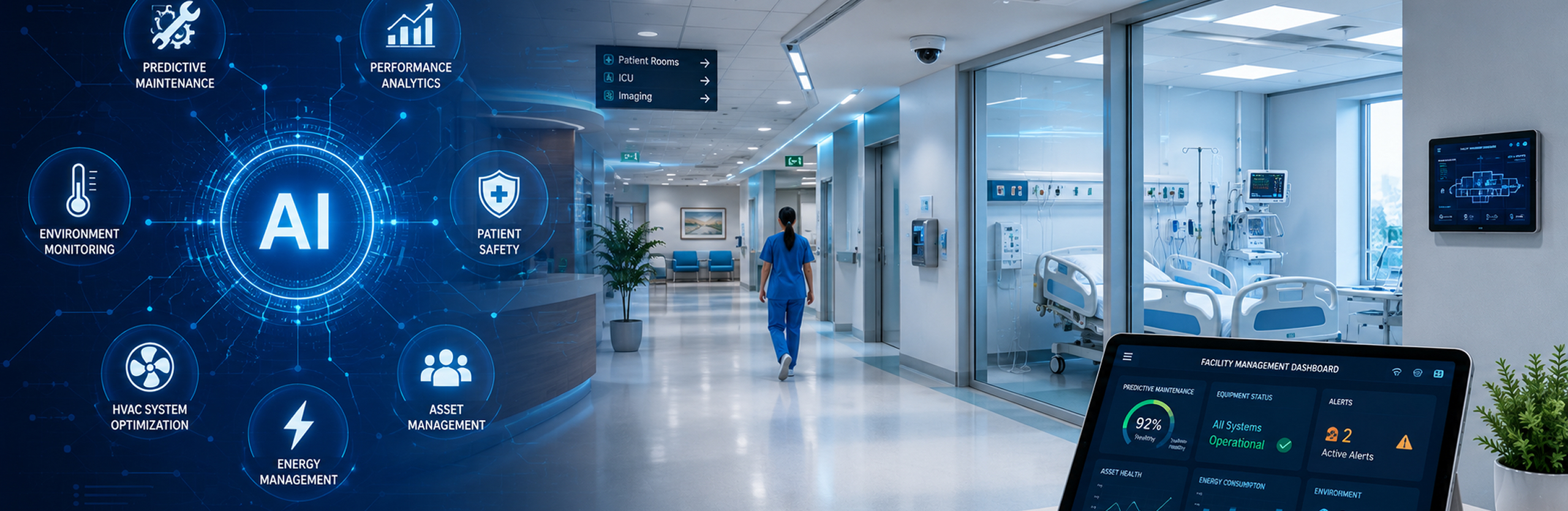
In 2026, IFM models in the UAE are increasingly supported by:
- CMMS platforms
- IoT-based monitoring systems
- Smart building integration
- Real-time reporting dashboards
- Predictive maintenance analytics
Organizations managing commercial towers, healthcare facilities, aviation assets, logistics hubs, and educational campuses require structured operational oversight for operational efficiency.
For this reason, the integrated model is favored as it supports:
Centralized Governance
A single operational structure reduces coordination gaps and enhances service consistency.
Data-Driven Maintenance
Predictive monitoring allows maintenance to be scheduled based on performance indicators rather than waiting until fixed intervals or emergency breakdowns.
Cost Optimization
Integrated procurement and manpower allocation reduce duplication and improve efficiency.
ESG Goals Alignment
Energy monitoring, carbon reporting, and water efficiency initiatives are easier to track, manage, and companies are more accountable within unified systems.
Risk Management
Emergency response planning and compliance oversight are streamlined.
These advantages are particularly relevant in high-density mixed-use facilities across urban environments such as Dubai.
Traditional FM vs Integrated FM: A Strategic Comparison
The following breakdown summarizes the differences between a traditional FM model and the integrated model.
Traditional Facilities Management |
Integrated Facilities Management |
|
| Organizational Model | Traditional facilities management operates through multiple vendors. | Integrated FM functions under a centralized hierarchy. |
| Accountability | In Conventional facilities management, accountability is distributed across contractors. | In the integrated model, responsibility is unified, further enhancing productivity and efficiency. |
| Technology Integration | Traditional FM Solutions mainly rely on periodic inspections and manual reporting. | IFM incorporates digital platforms and performance analytics to observe, analyze, and improve operations. |
| Asset Lifecycle Approach | Traditional FM focuses on individual areas and tasks and their completion. | The integrated approach encompasses the entire system and emphasizes long-term optimization of assets. |
| Operational Visibility | Traditional facilities management systems deal with respective tasks, unaware of other routine FM operations. | Integrated models offer consolidated reporting across company-level FM operations, providing strategic insights. |
Despite integration of FM services trends, traditional facilities management in the UAE remains viable under certain conditions:
- Smaller standalone properties
- Low-technology environments
- Budget-sensitive projects
- Owners preferring direct vendor engagement
- Properties with limited system interdependence
The suitability of traditional FM services in Dubai depends on property scale, complexity, and long-term objectives.
The Financial Perspective: Beyond Immediate Cost
Traditional FM may appear cost-effective due to segmented budgeting. However, long-term considerations include:
- Administrative overhead
- Inefficiencies caused by duplication in work
- Delays in cross-system issue resolution
- Higher lifecycle maintenance costs
Considering the above-mentioned limitations of traditional FM solutions, IFM models offer improved support, including:
- Asset longevity
- Energy efficiency
- Resource utilization
- Strategic forecasting
In 2026, many organizations across the UAE are evaluating total lifecycle value rather than isolated contract pricing, and that’s where integrated models are winning.
The Influence of Expertise in Choosing the Right Model
Transitioning from traditional FM to integrated structures requires operational maturity, regulatory understanding, and sector-specific knowledge.
Experienced providers in the UAE recognize that both models have valid applications depending on asset profile and business goals.
That’s why organizations increasingly seek FM partners who understand:
- Local compliance frameworks
- Infrastructure demands
- Performance benchmarking
- Sustainability reporting standards
Providers such as Al Arabia Facilities Management L.L.C. have contributed to this industry evolution by applying structured FM processes, technology-enabled comprehensive oversight, and performance-focused operational frameworks tailored to businesses.
Rather than prescribing one model universally, strategic FM implementation depends on careful evaluation and precise execution.
Final Thoughts
The difference between traditional facilities management and integrated FM reflects the broader transformation of the UAE’s built environment.
Traditional FM solutions prioritize segmented service delivery and discipline-specific specialization, whereas IFM emphasizes coordination, centralized accountability, data integration, and lifecycle optimization.
In 2026, facility management has evolved from a background support function to a strategic pillar influencing operational resilience, compliance readiness, sustainability performance, and a tool for enhancing long-term asset value.
And the right choice is defined by alignment with business objectives, infrastructure complexity, and growth strategy.