
Smart Buildings in the UAE: What Facility Managers Need to Know in 2026
Infrastructure across the UAE is undergoing a significant transformation through connected systems, automation, and data-driven technologies.
And Dubai’s growing focus on integrated digital infrastructure, including the launch of its Digital Twin Platform in 2026, reflects the wider direction of the UAE’s built environment
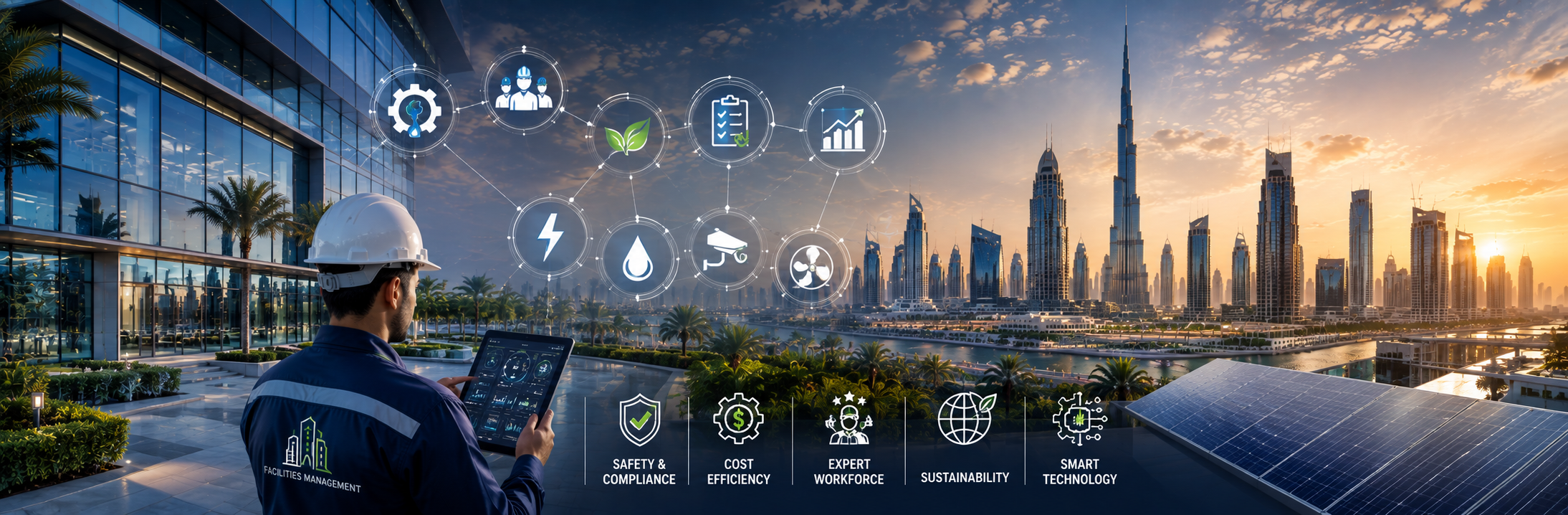
However, a smart building is defined less by the deployment of sensors, digital platforms, or automated controls and more by how effectively these technologies improve operational efficiency, asset performance, energy management, and occupant experience.
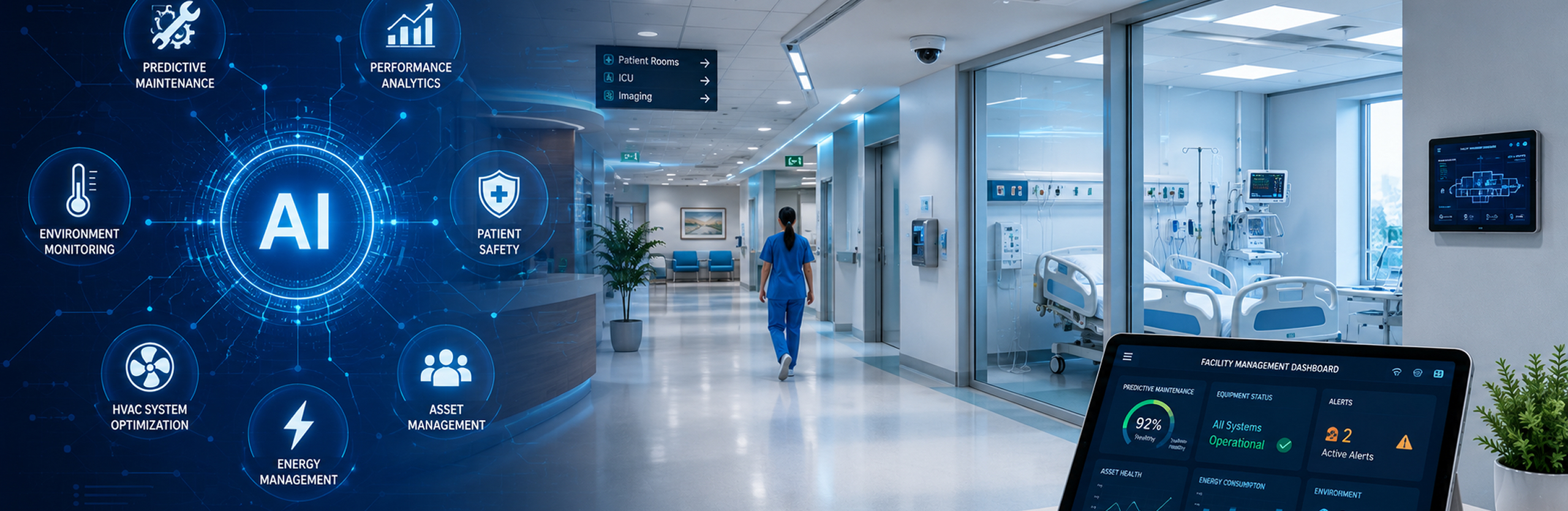
As buildings become more complex, smart building technology is changing how assets are monitored and maintained, and how energy is managed.
With the shift, the key question for facility managers is how to ensure smart facilities deliver reliable, efficient operational value.
First, What Makes a Building Smart?
A smart building is a building that uses connected technologies, sensors, automation, and data to monitor and manage its different systems.
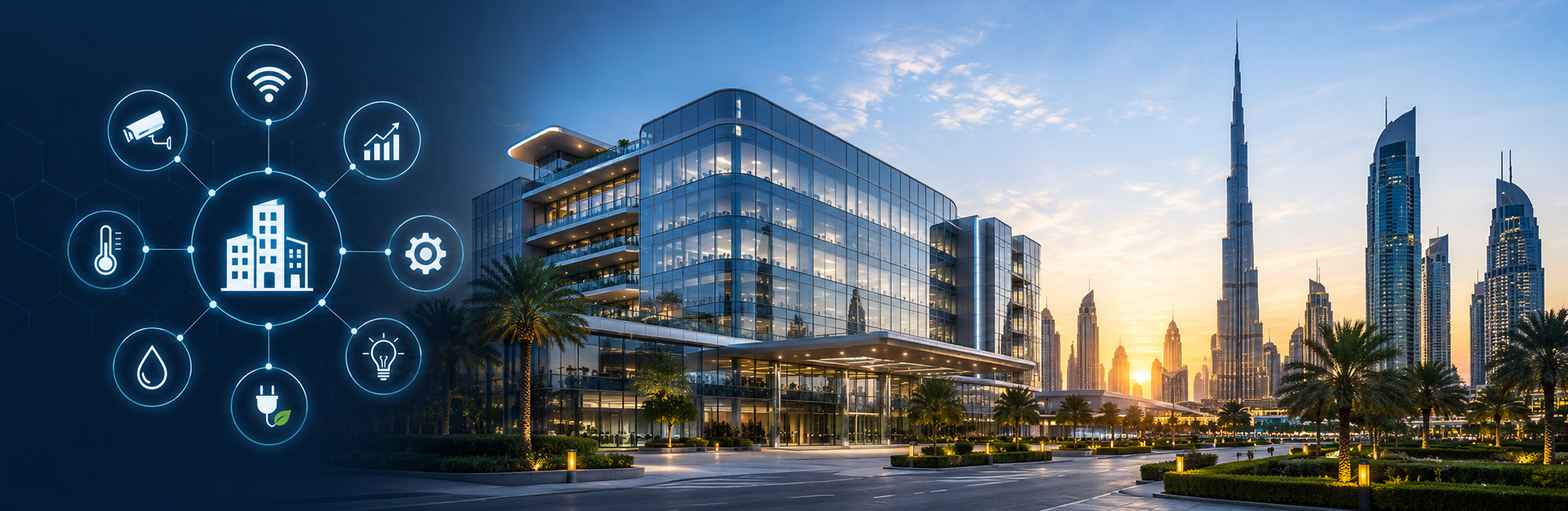
In such buildings, lighting, HVAC, security, access control, elevators, energy, and other systems communicate through an integrated digital platform, allowing the building to respond to changing conditions.
This means that smart lighting and HVAC systems adjust based on occupancy levels and environmental conditions, access control integrates with security systems, and energy platforms analyze consumption patterns to support more efficient resource use.
Automation performs predefined actions, while smart building technology uses connected data to make those actions more responsive, coordinated, and informed.
This translates into improved energy efficiency, greater occupant comfort, enhanced security, better space utilization, and more informed decision-making.
Why Smart Buildings are On the Rise in the UAE
The UAE presents a particularly demanding operating environment for buildings.
High government standards, cooling requirements, intensive asset usage, and large commercial developments make operational efficiency critical.
Energy management automatically becomes paramount, aligning closely with the UAE Energy Strategy 2050, which targets a 40% reduction in energy consumption by 2050.
For buildings, smart technologies can support this ambition by monitoring energy use in real time, identifying inefficiencies, and adjusting systems based on occupancy and demand.
Read more: How Energy-efficient Facilities Management Helps Reduce Operational Costs for UAE Businesses
However, energy is only one part of the equation. A genuinely smart facility should also support asset reliability, occupant comfort, safety, maintenance planning, compliance, and business continuity.
From Preventive Maintenance to Predictive Maintenance
One of the most important changes enabled by smart facilities management is the move from fixed maintenance schedules towards condition-based analytical and predictive approaches.
Traditional preventive maintenance remains crucial.
However, connected monitoring adds another layer of intelligence by showing how equipment performs between scheduled visits, identifying deviations, and alerting the maintenance team.
Moreover, AI-supported facility management is already being used to identify performance anomalies and support predictive maintenance across facilities in the UAE.
The same principle applies to pumps, electrical equipment, elevators, chillers, and other critical assets.
Maintenance teams can prioritize interventions based on actual asset conditions instead of responding to breakdowns, in turn reducing unplanned downtime, improving asset reliability, and supporting longer equipment lifecycles.
Empowering Facility Managers Through Smart Technology
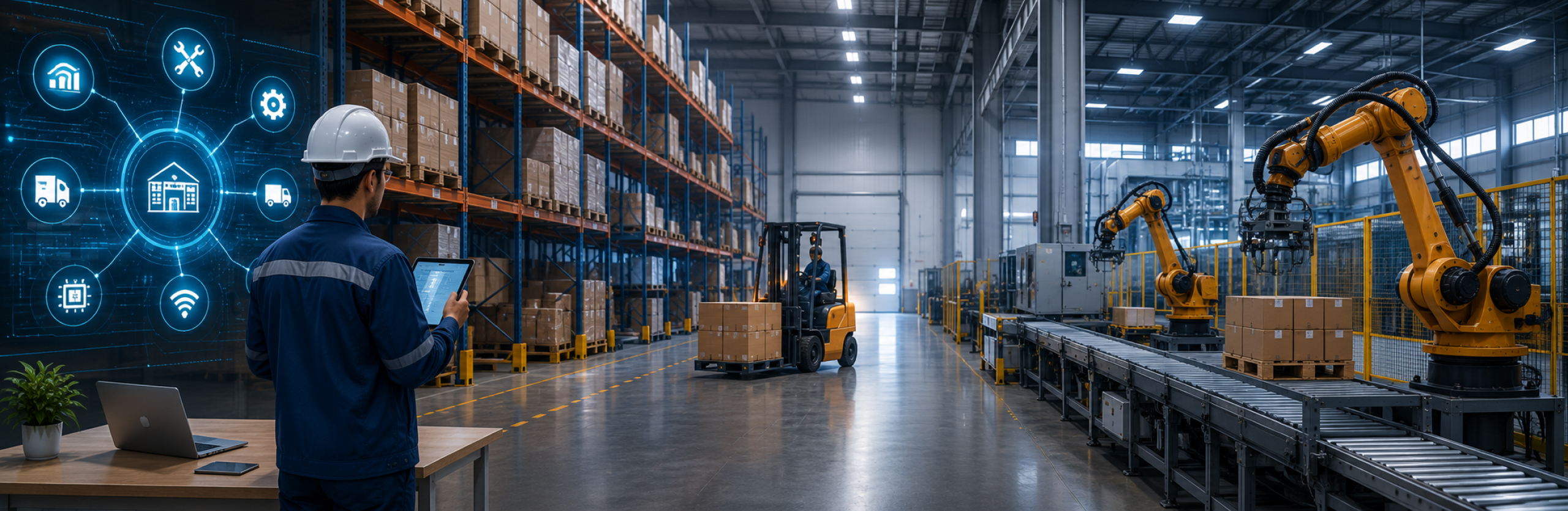
Smart technology provides better visibility and control over building operations, with real-time data helping teams understand how spaces and systems are performing.
Integrated platforms bring key building functions into one view, making it easier to monitor energy use, occupancy, indoor conditions, security, and space utilization.
Ultimately, smart building technology strengthens the role of facility managers by combining digital intelligence with professional expertise and greater accountability.
Al Arabia Facilities Management L.L.C. takes this integrated approach by combining technology-enabled monitoring with preventive and predictive maintenance, technical expertise, reporting, and structured facility management.
For a broader understanding of how technology is reshaping facility operations, read Digital Transformation in Facilities Management in the UAE.
Key Considerations for Smart Building Solutions in 2026
While all tech advancements sound amazing, smart facilities solutions should be personalized for the building’s specific requirements and long-term objectives.
Facility managers should first identify areas where technology can create measurable value.
This could include improving energy efficiency, optimizing space utilization, enhancing occupant comfort, or gaining better visibility across building systems.
Integration is another important consideration. With different systems working together through a connected infrastructure, data should be open for access and analytics from a central platform.
That said, security remains a priority as connected systems require appropriate access controls, reliable data management, and strong cybersecurity measures.
Finally, smart building solutions should be scalable. As building requirements change, the technology should accommodate new systems and capabilities without requiring a complete overhaul.
The Future of Smart Building Management in the UAE
AI, IoT, automation, and real-time analytics are becoming part of a broader shift towards data-led infrastructure. And Dubai’s Digital Twin Platform is pushing the integration of physical assets and digital intelligence across industries.
For facility managers, the objective is not mere tech adoption, but making facilities more reliable, efficient, measurable, and easier to manage with the right framework.
With experienced operations and maintenance support, organizations can turn connected building data into practical decisions, stronger asset performance, and more resilient facilities.
And Al Arabia Facilities Management L.L.C. supports this transition through integrated, technology-enabled FM and maintenance solutions designed around the operational requirements of UAE facilities.