
What Role Does Healthcare Facilities Management Play in Infection Control in UAE Hospitals in 2026?
Hospitals are highly controlled environments.
Airflow, surface materials, waste systems, water quality, temperature, and pressurization all directly influence infection risks.
In such critical environments, healthcare facilities management in the UAE plays a central role in keeping them safe and seamlessly operational.
What’s usually missed by the human eye is that behind every safe patient room, sterile operating theatre, and clean ICU ward is a structured system of engineering controls managed through professional hospital facilities management teams.
Further, in major healthcare hubs like Dubai and Abu Dhabi, hospitals are expanding, digitizing, and increasing capacity.
At the same time, regulatory standards have tightened after the breakout of COVID, and patient expectations are also rising. That’s why infection prevention is now deeply integrated into how most health facilities management systems are designed, maintained, and monitored.
Infection Control: Beyond Basics
When people think about infection control, they usually think about doctors, nurses, and hygiene protocols. But the physical environment plays just as big a role.
Air handling systems, pressure differentials, filtration units, plumbing networks, and surface finishes all contribute to how pathogens are contained.
In order to maintain a safe and sterile environment, healthcare FM services need to ensure:
- Frequent air changes per hour in critical zones
- HEPA filtration in operating rooms and isolation wards
- Negative and positive pressure rooms are functioning correctly
- Stable temperature and humidity levels
- Safe water systems that prevent bacterial growth
If ventilation systems fail or pressure controls fluctuate, the risk of airborne transmission increases.
That’s why hospital facilities management teams continuously monitor HVAC performance to ensure infection is contained.
In the UAE’s climate, HVAC systems operate heavily year-round.
Structured healthcare facilities maintenance is particularly critical in high-demand healthcare environments such as Dubai and Abu Dhabi, where patient inflow and outflow are significant.
These strategies prioritize routine inspections, filter replacements, duct cleaning, and performance verification to ensure infection control standards and compliance are consistently met and no mishap happens.
Engineering Environmental Hygiene
While it sounds basic, clean hospitals are the result of seamlessly coordinated soft and hard FM services working together.
Healthcare facilities management teams in the UAE work around the clock to disinfect contact surfaces and ensure infrastructure is well-curated to support these efforts. This includes incorporating:
- Antimicrobial surface material selection
- Easy-to-clean walls and flooring systems
- Controlled waste disposal routes and routines
- Segregated pathways and control measures for critical zones
- Automated door systems to reduce touchpoints
Modern hospital FM solutions integrate design, engineering, and operational planning to minimize contamination risks across facilities.
Water Management Systems and Infection Risk
Water systems are another critical area where healthcare facility management in the UAE directly impacts infection control.
Poorly maintained plumbing networks can lead to transmission of waterborne pathogens and bacteria.
In order to avoid contamination through water management systems, hospitals must constantly and carefully monitor:
- Water temperature levels
- Storage tank cleanliness
- Pipe flushing schedules
- Legionella risk management
- Drainage system integrity
Preventive maintenance programs not only avoid breakdowns but also ensure water safety standards remain compliant with healthcare regulations in the UAE.
This is why healthcare FM services employ integrated models, including strict water testing schedules, system audits, and proactive interventions to prevent contamination before it spreads.
Isolation Rooms and Critical Care Environments
Isolation rooms are highly controlled spaces.
For proper functioning, facilities teams need to maintain precise pressure calibration and constantly monitor it to ensure:
- Negative-pressure rooms maintain correct airflow direction
- Pressure monitors are calibrated and functional
- Alarm systems alert staff to deviations
- Backup power systems support critical ventilation
Infection control in ICUs and operating theatres is directly linked to how well hospital facilities management maintains these technical environments.
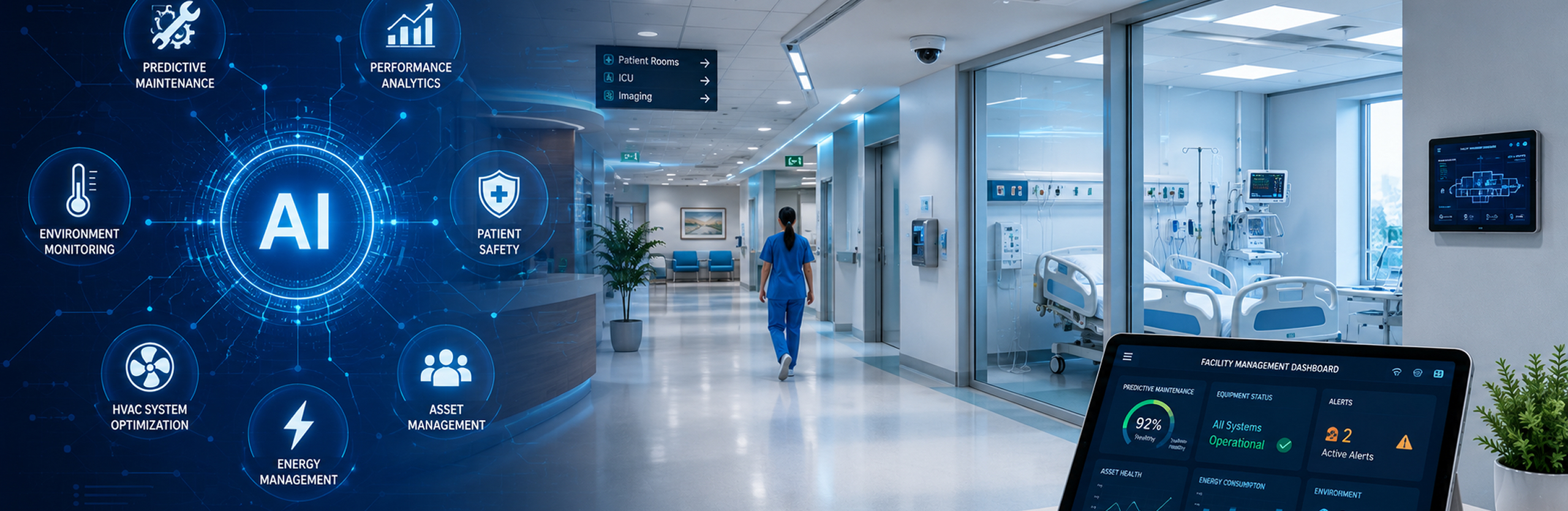
Advanced healthcare facilities maintenance teams in Dubai use digital dashboards that now track airflow, filtration performance, and room pressurization in real time.
This reduces reliance on manual checks, removes any human error, and improves response times.
Waste Management and Contamination Control
Medical waste handling is another area where hospital FM solutions directly support infection control.
Sharps disposal, biohazard segregation, and transport of contaminated materials must follow strict protocols to reduce cross-contamination, including:
- Dedicated service elevators for waste disposal
- Sealed transport carts
- Controlled disposal zones
- Regular sanitation of waste holding areas
Without structured healthcare FM services, waste management processes can compromise otherwise sterile environments.
Technology-driven Infection Monitoring
In 2026, hospitals in the UAE are increasingly data-driven.
Smart sensors, digital maintenance platforms, and automated alerts are becoming standard components of healthcare FM services.
Facilities teams now use:
- Building Management Systems (BMS)
- Real-time air quality monitoring
- Predictive maintenance analytics
- Digital compliance tracking tools
This shift offers hospital facilities management in the UAE measurable performance indicators, which in turn help contain infections.
Using these structured systems, FM teams identify deviations early and intervene proactively, rather than waiting for system failures.
The integration of technology strengthens accountability and supports regulatory audits.
Compliance, Accreditation, and Regulatory Alignment
Healthcare environments in the UAE operate under strict regulations.
Infection prevention standards are critical for patient well-being. Hence, they are closely monitored, and non-compliance carries significant consequences.
Professional hospital facilities management ensures documentation, inspection records, maintenance logs, and performance metrics are audit-ready at all times.
Infection control committees increasingly collaborate with FM teams to align engineering controls with clinical protocols. And this partnership strengthens the hospital’s overall infection prevention framework.
The Strategic Shift in 2026
The biggest change in 2026 is the mindset.
While infection control is a medical necessity, it is operational and structured with hospital FM solutions. Modern health facilities management bridges the gap between engineering systems and patient safety.
It ensures that infrastructure actively supports clinical objectives for operational comfort and seamless functionality.
To support this shift, hospitals across the UAE are increasingly adopting integrated hospital FM solutions that combine hard and soft FM services, compliance oversight, and predictive maintenance under one structured model.
Partnering with leading specialized FM service providers, like Al Arabia Facilities Management L.L.C., ensures healthcare facilities implement systematic engineering controls, preventive maintenance strategies, and compliance-driven service delivery.
The goal for us is simple but critical: reduce infection risk by design, not by reaction.
Looking Ahead
As healthcare demand grows and medical technologies advance, hospitals in the UAE will become even more complex. Infection control standards and patient safety expectations will rise.
Strong healthcare facilities management frameworks in the UAE will remain central to this evolution.
From air systems and water safety to waste management and digital monitoring, healthcare FM services form the invisible safety layer protecting patients, staff, and visitors every day.
It is about creating controlled, compliant, and clinically safe environments where the healthcare industry can operate without compromise.