
Facilities Management in the UAE: What Businesses Must Prepare for in 2026
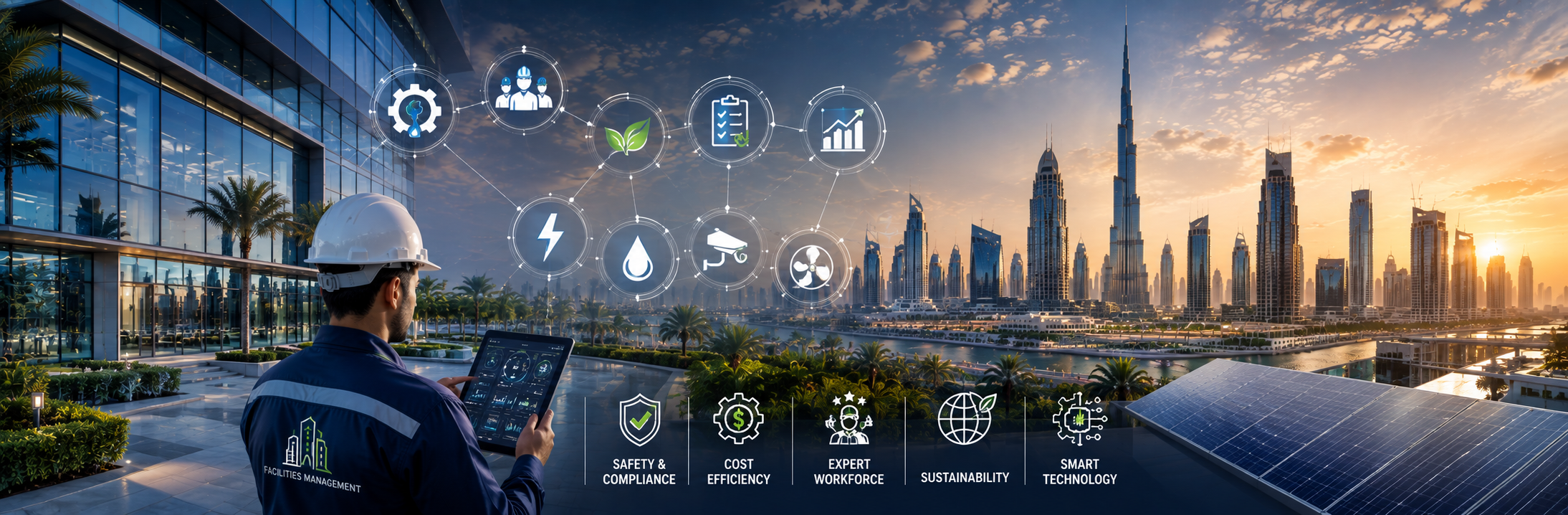
Facilities management in the UAE is stepping into a much bigger role than it held just a few years ago.
What was once seen mainly as a support function has evolved into a critical part of how businesses operate. It also defines how they comply with regulations and plan for long-term growth.
As 2026 approaches, the way organizations across Dubai, Abu Dhabi, and the wider Emirates view facilities management for business is changing.
And, this change is not happening in isolation.
Rapid urban expansion, increasing operational costs, tighter regulatory frameworks, sustainability targets, and faster digital adoption are all reshaping expectations from facilities management teams.
To stay competitive, resilient, and future-ready, organizations must keep up with new trends in facilities management.
Facilities management for businesses now extends well beyond normal maintenance and reactive repairs.
Many organizations today rely on facilities management for improving operational efficiency, employee well-being, regulatory compliance, and asset preservation.
FM operations are requested to provide clear, measurable value in commercial high-rises, industrial sites, healthcare facilities, and mixed-use developments.
Looking forward to 2026, this anticipation will only grow.
Facilities are being required to maintain uninterrupted operations while also meeting tougher compliance standards and protecting long-term asset value.
As a result, business facilities management is moving toward more integrated, data-driven, and performance-oriented strategies, where organizations are adopting proactive initiatives rather than reacting to problems as they arise.
As the FM industry adapts to changing business demands, several new trends in facilities management are becoming increasingly prominent across the UAE.
1. Technology-Driven Facilities Management
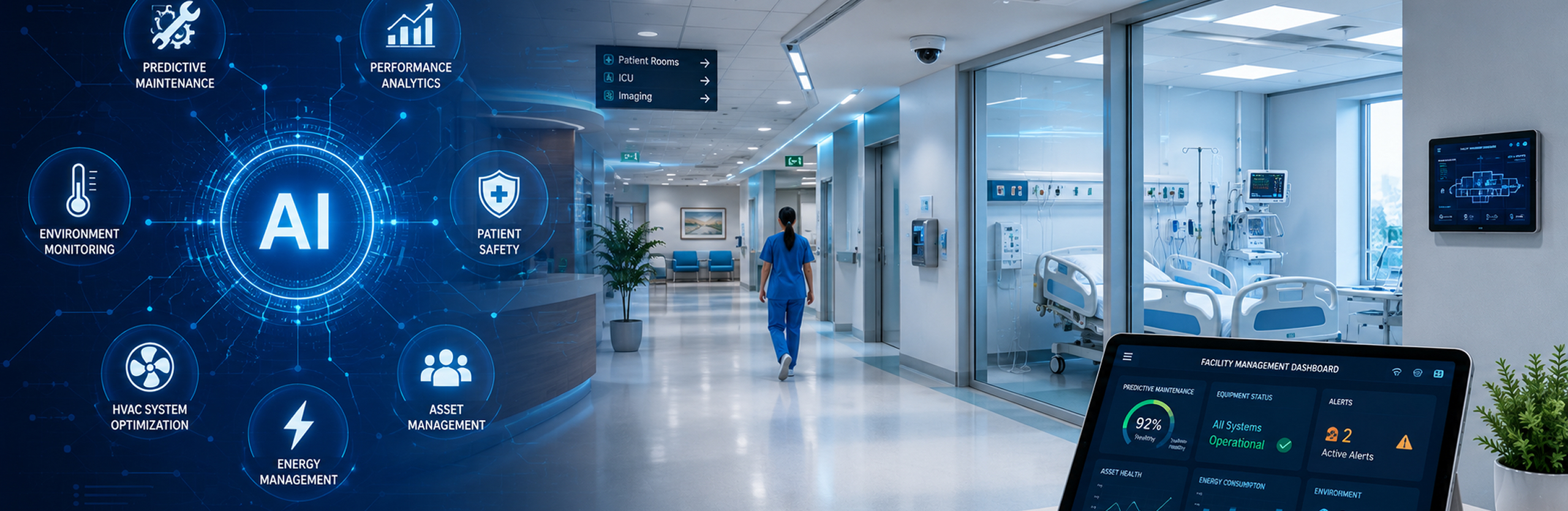
Technology is transforming the way facilities are administered. In the UAE, legal frameworks and smart city projects also encourage technology adoption.
Leading FM providers such as Al Arabia Facilities Management L.L.C. have introduced structured digital procedures that allow more insight into assets, service performance, and compliance indicators.
This method guarantees that technology is not introduced in isolation, but rather incorporated into daily operational decision-making.
Advanced facilities management technology, such as IoT-enabled sensors, cloud-based FM platforms, and smart building systems, is also gaining traction throughout the area.
These solutions enable facility managers to monitor assets in real time, measure performance indicators, and detect inefficiencies before they become costly concerns.
For organizations, this transition offers increased uptime, lower operating costs, and more insight and control over complex facility portfolios.
By 2026, digital-first FM tactics will start to be a minimum need rather than a competitive advantage.
2. Predictive and Proactive Maintenance Models
Traditional reactive maintenance practices are being phased out.
Instead, companies are investing in predictive maintenance frameworks based on data analytics and system intelligence.
Implementing equipment health monitoring, automatic alarms, and performance predictions allows teams to plan maintenance early and based on real usage and condition rather than set intervals.
This progression in FM for businesses minimizes downtime, increases asset longevity, and improves budgeting accuracy, which is a major benefit for large-scale operations around the UAE.
3. Integrated Facilities Management as Standard Practice
IFM is emerging as the preferred operating strategy for businesses with complex infrastructure.
Rather than managing several suppliers for diverse services, organizations are merging hard and soft FM services into unified frameworks. This method enhances coordination and cost-effectiveness while maintaining consistent service quality.
Integrated facility management also promotes better governance and accountability.
A single operational structure offers organizations better service delivery, regulatory adherence, and performance criteria.
This concept becomes more useful in regulated industries, where uniformity and traceability are essential.
Experienced providers, such as Al Arabia Facilities Management L.L.C., have shown how integrated FM frameworks increase service quality across diverse assets.
By 2026, integrated FM models will be an important part of business facilities management, especially in healthcare, aviation, education, logistics, and commercial real estate.
Sustainability is no longer seen as a stand-alone endeavor.
Facilities in the UAE are expected to match their operations with national sustainability goals and ESG benchmarks.
Energy efficiency, water conservation, waste reduction, and carbon footprint management are becoming critical components of FM objectives.
Businesses will be expected to have greater reporting obligations and higher performance criteria.
In response, facilities management teams must now combine operational efficiency with environmental responsibility, a move that will determine FM performance in 2026 and beyond.
Data is becoming one of the most valuable assets in modern FM operations.
Advanced analytics platforms allow organizations to convert operational data into actionable insights.
Energy usage patterns, asset performance reports, occupancy, and maintenance histories enable structured planning and informed decision-making.
For businesses, this means:
- Smarter budgeting and forecasting
- Improved space utilization
- Enhanced risk management
- Stronger commitment to compliance
As the trend and governmental pressure for transparency grow, data-backed FM strategies will be essential for organizations from 2026 onwards.
Another significant development in the latest facility management trends is the emphasis on occupant experience.
Facilities are no longer evaluated exclusively based on infrastructure performance. Employee comfort, safety, air quality, and accessibility are widely recognized as critical markers of operational performance.
Businesses now realize that well-managed workspaces directly enhance productivity, retention, and brand reputation.
Facilities management teams are incorporating wellness-focused design concepts, smart environmental control, and preventative health measures into their daily operations, a trend that is predicted to accelerate by 2026.
The events of recent years have reshaped how organizations approach risk. Facilities management now plays a crucial role in business continuity planning. Emergency preparedness and rapid response capabilities have become standard requirements.
As facilities grow more connected and automated, FM teams must also address operational vulnerabilities alongside structural risks.
Preparing for 2026 means building resilient facilities that can adapt to disruptions and respond to emergencies while maintaining operational stability.
With tech advancing rapidly, facility managers are expected to possess a broader skill set that includes data analysis, digital system management, strategic oversight, and even sustainability planning.
Continuous training and upskilling are essential components of effective FM for businesses.
Organizations need to invest in workforce development to ensure their FM teams can manage advanced systems while maintaining service quality across diverse facilities.
The Role of Industry Expertise in FM Transformation
As facilities management evolves, expertise and operational maturity are becoming decisive factors in successful FM transformation.
Organizations across the UAE are increasingly relying on experienced FM providers that understand local regulations, infrastructure demands, and sector-specific challenges.
Companies such as Al Arabia Facilities Management L.L.C.have contributed to this evolution by applying structured FM processes, technology-enabled insights, and performance-focused service models that support businesses long-term.
Preparing for the Future of Facilities Management
As we enter 2026, it’s evident that facilities management in the UAE is undergoing a fundamental shift. FM operations are moving towards smarter systems, stronger integration, and a more strategic role within organizations.
And businesses that stay ahead of evolving facility management trends are likely to be
- Better equipped to manage operating costs
- Adhere to compliance and sustainability
- Enhance asset value and longevity
- Support steady, long-term growth
Preparing for what lies ahead involves more than adopting new tools.
It requires thoughtful innovation, targeted investment, and closer alignment between FM operations and wider business objectives.
And when you partner with a trustworthy company like Al Arabia Facilities Management L.L.C., we not only support your business but help scale it with efficient, responsible, and resilient FM solutions.