
How Facilities Management Companies in the UAE Maintain Business Continuity in 2026
Facilities management in the UAE is entering a more complex and strategically demanding phase in 2026.
While the country continues to be a global business hub, organizations demand operational resilience.
Businesses must remain secure, functional, and adaptable even during uncertain conditions. As a result, facilities management companies across the UAE are redefining their priorities.
The focus is shifting toward structured facilities management resilience, advanced planning, and integrated risk frameworks that support uninterrupted operations.
The demands for facilities management have evolved significantly in the last month. Previously, risk was largely operational, including equipment failure, maintenance delays, and compliance gaps.
Now, newer challenges have been introduced, such as:
- Workforce safety and mobility risk
- Increased pressure on energy and utility systems
- Heightened physical and digital security concerns
- A strained supply chain, affecting critical materials
To manage this complexity, organizations are placing greater emphasis on continuous facilities risk assessment rather than periodic reviews.
This means risk is being monitored in real time, supported by data and predictive insights. Instead of reacting to disruptions, FM teams are working to anticipate them.
1. Building Facilities Management Resilience as a Priority
Resilience in facilities management is now embedded into daily decision-making. It is no longer considered an emergency measure.
And this comes through a combination of infrastructure, technology, and planning.
Infrastructure Preparedness
Critical systems such as power, water, and communication networks are being reinforced with redundancy measures to improve efficiency in times of need.
Backup systems, alternative suppliers, and decentralized operations further ensure that facilities can continue functioning even if primary systems are disrupted.
Operational Flexibility
Facilities are being designed and managed with adaptability in mind.
This includes flexible space utilization, modular systems, and scalable operations that can adjust quickly to changing conditions.
Strategic Planning
Organizations are developing long-term facilities management strategy frameworks that integrate resilience planning into overall business objectives.
This ensures that resilience is a part of a structured operational approach.
2. Advanced Facility Risk Management in Practice
Facility risk management is becoming more sophisticated and data-driven.
Modern FM teams are no longer relying on static reports.
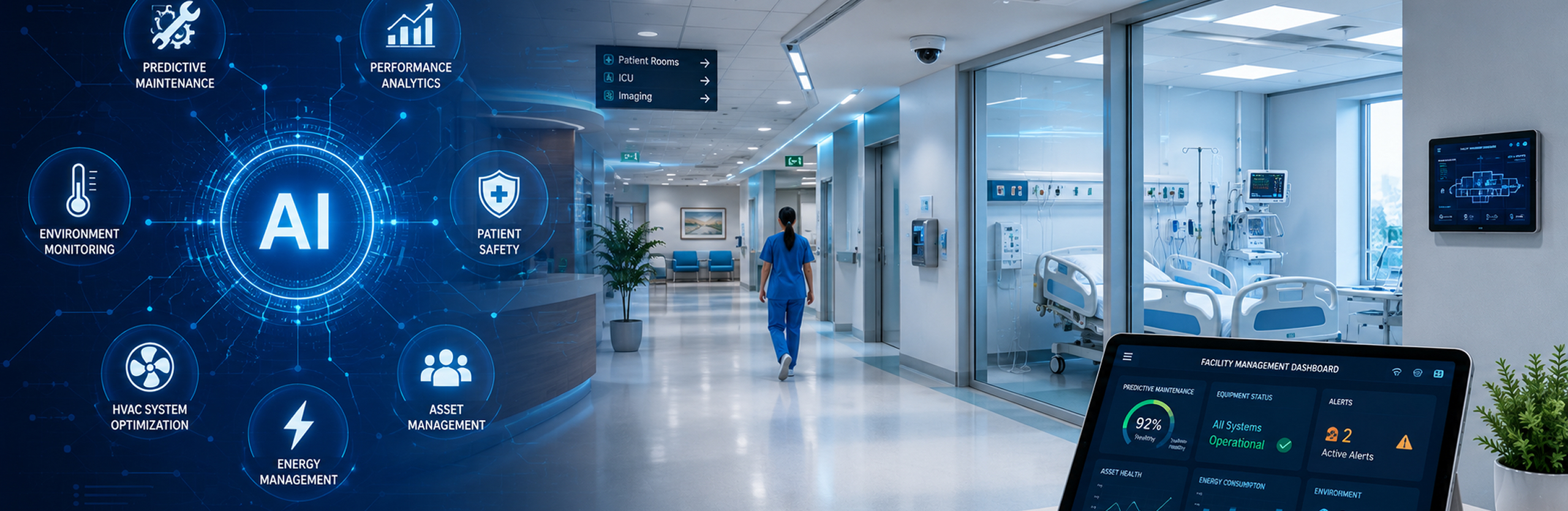
The focus has shifted toward digital tools and analytics to gain continuous visibility into facility performance and vulnerabilities.
Key developments include:
- Real-time monitoring of critical systems
- Predictive maintenance to reduce unexpected failures
- Risk scoring models that prioritize high-impact areas
- Integration of risk into operational dashboards
This approach allows organizations to make informed decisions quickly and allocate resources more effectively.
It also strengthens accountability, as risk management becomes measurable and aligned with business performance indicators.
3. Strengthening Security and Facility Risk Assessment
Security has become one of the most critical components of FM, especially in recent days.
Companies are investing heavily in facility security and risk assessment to protect both physical and digital assets.
This process now goes beyond traditional security checks. It involves a comprehensive evaluation of vulnerabilities across multiple layers, including:
- Building access control systems
- Surveillance and monitoring technologies
- Cybersecurity risks within smart building infrastructure
- Emergency response readiness
Advanced technologies are playing a key role in this area.
Artificial intelligence, biometric systems, and integrated security platforms are enabling more accurate threat detection and faster response times.
Security is now integrated into the overall facilities management strategy, ensuring alignment between safety and operational continuity.
4. Crisis Facilities Management Takes on a More Active Role
Crisis response requires putting in place practical response systems that can be activated immediately when disruptions occur.
This shift is visible in how facilities teams are preparing on the ground. Many are now working with:
- Scenario-based planning tailored to different types of disruptions
- Centralized control setups that support faster, more coordinated decisions
- Dedicated on-site response teams trained to handle emergencies
- Real-time communication channels to keep teams, occupants, and stakeholders informed
Regular drills have also become more common to test real response capabilities, identify weak points, and improve coordination under pressure.
What stands out is the change in mindset. Crisis management is no longer treated as a backup plan. It is becoming an operational necessity that teams rely on with confidence when situations demand it.
5. Supply Chain Adaptation and Local Strengthening
The need for resilience has made one thing very clear: the importance of global supply chains.
Facilities management companies in the UAE are responding by rethinking how they source critical materials and services for businesses.
The goal is simple: reduce exposure to external disruptions and improve response speed when challenges arise.
This is leading to more grounded, practical approaches such as:
- Building stronger relationships with local suppliers
- Keeping essential materials readily available through planned reserves
- Expanding supplier networks across different regions to avoid dependency
These adjustments help facilities maintain stability during disruptions and recover more quickly. Over time, it also contributes to greater facilities management resilience.
Another clear shift is how risk is being handled within facilities management. It is no longer treated as a separate function or a periodic exercise.
Instead, risk considerations are being built directly into everyday FM strategies.
And because of this, today’s facilities management strategy frameworks are more structured and connected. They typically include:
- Ongoing facilities risk assessment supported by real operational data
- Defined facility risk management processes that align with business priorities
- Closer coordination between facilities teams, security, IT, and leadership
This integrated approach allows organizations to respond more effectively to challenges while maintaining consistent performance across their operations.
Digital systems are now the core operational setup.
Smart building technologies, connected sensors, and cloud-based platforms are helping teams stay informed and in control.
This offers better visibility into daily operations, which helps facilities teams spot issues early, respond faster, and avoid larger disruptions.
Data is also being used more effectively to understand patterns, assess risks, and improve decision-making. Such technology-driven FM strategies have grown more popular in facilities with more unprecedented working conditions.
As facilities management evolves, the expectations from FM professionals are demanding.
Technical knowledge alone is no longer enough.
Teams are now expected to understand risk, work with digital systems, and contribute to broader operational planning.
To keep up, FM organizations like Al Arabia Facilities Management L.L.C. are placing more focus on practical training and skill development in areas such as:
- Emergency response and crisis coordination
- Use of digital tools and data interpretation
- Security awareness and compliance requirements
- Day-to-day decision-making in dynamic environments
We believe that a well-prepared workforce is the enabler that ensures that crisis facilities management efforts are effective and that operations remain stable even under pressure.
Effective facility risk management requires factoring in uncertainty.
With facility security risk assessment and well-structured FM strategies, FM companies in the UAE can ensure safety, compliance, and operational goals remain aligned.
It enhances facilities management resilience and creates business environments that can tackle disruption and maintain continuity.
What this ultimately leads to is greater confidence in a business.
And facilities management, in this context, has become a key factor in maintaining operational continuity and optimum efficiency, even in uncertain times.